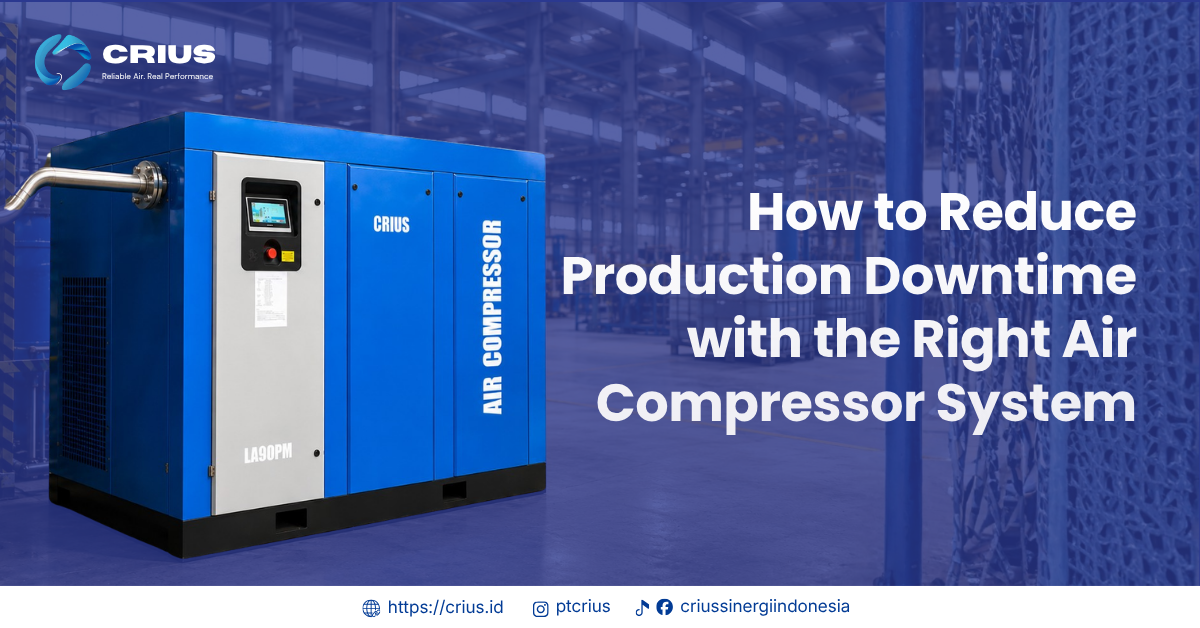
In the industrial world, production downtime is a major cause of decreased productivity and increased operational costs. When production stops due to disruptions to utility systems, companies not only lose production time but also potentially experience delivery delays, reduced product quality, and increased repair costs.
One utility that plays a crucial role in maintaining production continuity is the air compressor. Nearly all manufacturing industries utilize compressed air to operate machinery, pneumatic equipment, automation systems, and packaging processes. Therefore, when an air compressor malfunctions, the impact can be immediately felt throughout the entire production process.
The good news is that most causes of downtime can be prevented by selecting the right air compressor system, performing regular maintenance, and ensuring all supporting components are operating optimally.
1. Choose an Air Compressor that Suits Production Needs
Selecting an air compressor is the first step in determining the reliability of the overall system. A compressor with too small a capacity will operate continuously at maximum load, leading to faster wear and risk of overheating.
The choice of air compressor capacity must be tailored to production needs. A capacity that is too large will consume more electricity than actual needs, resulting in energy waste and a less efficient system.
Conversely, a capacity that is too small will cause the air compressor to continuously operate at full load to meet production air needs. This condition results in high electricity consumption, faster component wear due to the continuous workload, and an inability to optimally meet the needs of the production process. In the long term, this condition can increase the risk of downtime and maintenance costs.
Before determining the type and capacity of an air compressor, several factors need to be considered, including:
- Air capacity requirements (CFM or m³/min)
- Working pressure
- Production operating hours
- Air consumption patterns
- Potential for future machine additions
By selecting the right capacity, the air compressor will operate more stably, save energy, and have a longer lifespan.
2. Use an Air Dryer Suitable for Your Needs
The air produced by an air compressor still contains water vapor. If not dried, this water content can cause corrosion in piping, damage pneumatic components, and reduce product quality.
Using an air dryer is an important step in maintaining the quality of compressed air. In addition to producing drier air, air dryers also help maintain stable system performance and reduce the risk of damage to production equipment.
The type of air dryer selected must be tailored to the industry's characteristics, dew point requirements, and working environment.
3. Ensure the Filter is Always in Good Condition
Filters play a crucial role in maintaining air quality while protecting the internal components of the air compressor. Each type of filter has a different role, so they need to be inspected and replaced regularly according to recommended maintenance intervals. A dirty air filter can restrict air flow, causing the air compressor to work harder and increasing energy consumption.
A clogged oil filter can cause oil blockage, impeding optimal lubricant circulation to internal components. This condition increases operating temperatures and can potentially cause overheating in the air compressor system. If not addressed promptly, critical components such as the air end, bearings, and rotor can experience accelerated wear and even serious damage.
Meanwhile, a clogged oil separator will increase the differential pressure within the separator. This condition can cause the oil separator to become clogged, posing a risk of rupture. As a result, oil is carried along with the compressed air to the air receiver tank and even into machinery or production equipment. In addition to increasing oil consumption, this condition can contaminate the product, damage pneumatic equipment, and disrupt the production process. It can also cause the air compressor to run out of oil and overheat, causing the screw to jam, impacting machine operation, requiring overhaul, bearing replacement, and screw repair.
Failing to replace all filters on schedule not only reduces energy efficiency but also increases the risk of damage to the air compressor, accelerates component wear, and leads to production downtime.
Regularly replacing the filter is a simple step that has a significant impact on system reliability, operational efficiency, and the lifespan of the air compressor.
4. Use an Air Receiver Tank with the Right Capacity
The air receiver tank not only functions as a storage tank for compressed air but also helps maintain stable pressure in the system.
When air demand spikes, the air receiver tank will temporarily supply air so the air compressor doesn't have to operate at maximum load immediately. This helps reduce the frequency of start-ups, maintain stable pressure, and extend the life of compressor components.
The selection of the air receiver tank capacity must be adjusted to the air compressor capacity and the air requirements of the production process to ensure optimal system performance.
5. Optimize the Pipe Distribution System
Air compressor performance is also affected by the quality of the piping installation. Pipes that are too small, have too many connections, or have many sharp bends can cause high pressure drop.
Pressure drop forces the air compressor to produce greater pressure to maintain the pressure at the point of use. This condition increases energy consumption and accelerates machine wear.
Furthermore, leaks in the piping network are also a major cause of energy waste. Therefore, proper installation design and regular leak inspections are crucial to maintaining system efficiency.
6. Implement Regular Monitoring and Preventive Maintenance
Many major air compressor failures actually begin with minor, undetected issues. Rising temperatures, unstable pressure, or excessive operating hours are often early signs of system problems.
Through regular monitoring, the condition of the air compressor can be monitored, allowing potential damage to be identified more quickly. Checking parameters such as pressure, temperature, power consumption, oil level, and filter condition will help the maintenance team take action before more serious damage occurs.
In addition to monitoring, a scheduled preventive maintenance program is also crucial to ensure all components continue to operate according to manufacturer specifications.
Entrust Your Air Compressor System to PT CRIUS SINERGI INDONESIA
Reducing production downtime is not enough just by choosing a quality air compressor. It requires a properly designed system, supported by appropriate components, and regular maintenance to ensure the entire production process runs smoothly.
PT CRIUS SINERGI INDONESIA is a trusted partner for your industrial air compressor system needs. From providing air compressors, air dryers, air receiver tanks, filters, piping installation, commissioning, to preventive maintenance and system audits, we are ready to help ensure your company's air compressor system is operating optimally.
With a reliable and efficient system, companies can reduce the risk of downtime, save energy consumption, extend equipment lifespan, and sustainably increase productivity.
Schedule a consultation and system audit with PT CRIUS SINERGI INDONESIA. Our technical team is ready to help you find the best solution to improve the performance of your air compressor system and support the smooth operation of your industry.
One utility that plays a crucial role in maintaining production continuity is the air compressor. Nearly all manufacturing industries utilize compressed air to operate machinery, pneumatic equipment, automation systems, and packaging processes. Therefore, when an air compressor malfunctions, the impact can be immediately felt throughout the entire production process.
The good news is that most causes of downtime can be prevented by selecting the right air compressor system, performing regular maintenance, and ensuring all supporting components are operating optimally.
1. Choose an Air Compressor that Suits Production Needs
Selecting an air compressor is the first step in determining the reliability of the overall system. A compressor with too small a capacity will operate continuously at maximum load, leading to faster wear and risk of overheating.
The choice of air compressor capacity must be tailored to production needs. A capacity that is too large will consume more electricity than actual needs, resulting in energy waste and a less efficient system.
Conversely, a capacity that is too small will cause the air compressor to continuously operate at full load to meet production air needs. This condition results in high electricity consumption, faster component wear due to the continuous workload, and an inability to optimally meet the needs of the production process. In the long term, this condition can increase the risk of downtime and maintenance costs.
Before determining the type and capacity of an air compressor, several factors need to be considered, including:
- Air capacity requirements (CFM or m³/min)
- Working pressure
- Production operating hours
- Air consumption patterns
- Potential for future machine additions
By selecting the right capacity, the air compressor will operate more stably, save energy, and have a longer lifespan.
2. Use an Air Dryer Suitable for Your Needs
The air produced by an air compressor still contains water vapor. If not dried, this water content can cause corrosion in piping, damage pneumatic components, and reduce product quality.
Using an air dryer is an important step in maintaining the quality of compressed air. In addition to producing drier air, air dryers also help maintain stable system performance and reduce the risk of damage to production equipment.
The type of air dryer selected must be tailored to the industry's characteristics, dew point requirements, and working environment.
3. Ensure the Filter is Always in Good Condition
Filters play a crucial role in maintaining air quality while protecting the internal components of the air compressor. Each type of filter has a different role, so they need to be inspected and replaced regularly according to recommended maintenance intervals. A dirty air filter can restrict air flow, causing the air compressor to work harder and increasing energy consumption.
A clogged oil filter can cause oil blockage, impeding optimal lubricant circulation to internal components. This condition increases operating temperatures and can potentially cause overheating in the air compressor system. If not addressed promptly, critical components such as the air end, bearings, and rotor can experience accelerated wear and even serious damage.
Meanwhile, a clogged oil separator will increase the differential pressure within the separator. This condition can cause the oil separator to become clogged, posing a risk of rupture. As a result, oil is carried along with the compressed air to the air receiver tank and even into machinery or production equipment. In addition to increasing oil consumption, this condition can contaminate the product, damage pneumatic equipment, and disrupt the production process. It can also cause the air compressor to run out of oil and overheat, causing the screw to jam, impacting machine operation, requiring overhaul, bearing replacement, and screw repair.
Failing to replace all filters on schedule not only reduces energy efficiency but also increases the risk of damage to the air compressor, accelerates component wear, and leads to production downtime.
Regularly replacing the filter is a simple step that has a significant impact on system reliability, operational efficiency, and the lifespan of the air compressor.
4. Use an Air Receiver Tank with the Right Capacity
The air receiver tank not only functions as a storage tank for compressed air but also helps maintain stable pressure in the system.
When air demand spikes, the air receiver tank will temporarily supply air so the air compressor doesn't have to operate at maximum load immediately. This helps reduce the frequency of start-ups, maintain stable pressure, and extend the life of compressor components.
The selection of the air receiver tank capacity must be adjusted to the air compressor capacity and the air requirements of the production process to ensure optimal system performance.
5. Optimize the Pipe Distribution System
Air compressor performance is also affected by the quality of the piping installation. Pipes that are too small, have too many connections, or have many sharp bends can cause high pressure drop.
Pressure drop forces the air compressor to produce greater pressure to maintain the pressure at the point of use. This condition increases energy consumption and accelerates machine wear.
Furthermore, leaks in the piping network are also a major cause of energy waste. Therefore, proper installation design and regular leak inspections are crucial to maintaining system efficiency.
6. Implement Regular Monitoring and Preventive Maintenance
Many major air compressor failures actually begin with minor, undetected issues. Rising temperatures, unstable pressure, or excessive operating hours are often early signs of system problems.
Through regular monitoring, the condition of the air compressor can be monitored, allowing potential damage to be identified more quickly. Checking parameters such as pressure, temperature, power consumption, oil level, and filter condition will help the maintenance team take action before more serious damage occurs.
In addition to monitoring, a scheduled preventive maintenance program is also crucial to ensure all components continue to operate according to manufacturer specifications.
Entrust Your Air Compressor System to PT CRIUS SINERGI INDONESIA
Reducing production downtime is not enough just by choosing a quality air compressor. It requires a properly designed system, supported by appropriate components, and regular maintenance to ensure the entire production process runs smoothly.
PT CRIUS SINERGI INDONESIA is a trusted partner for your industrial air compressor system needs. From providing air compressors, air dryers, air receiver tanks, filters, piping installation, commissioning, to preventive maintenance and system audits, we are ready to help ensure your company's air compressor system is operating optimally.
With a reliable and efficient system, companies can reduce the risk of downtime, save energy consumption, extend equipment lifespan, and sustainably increase productivity.
Schedule a consultation and system audit with PT CRIUS SINERGI INDONESIA. Our technical team is ready to help you find the best solution to improve the performance of your air compressor system and support the smooth operation of your industry.